Initial Rewards as Catalysts for Moving Between Table Games and Football Wagers

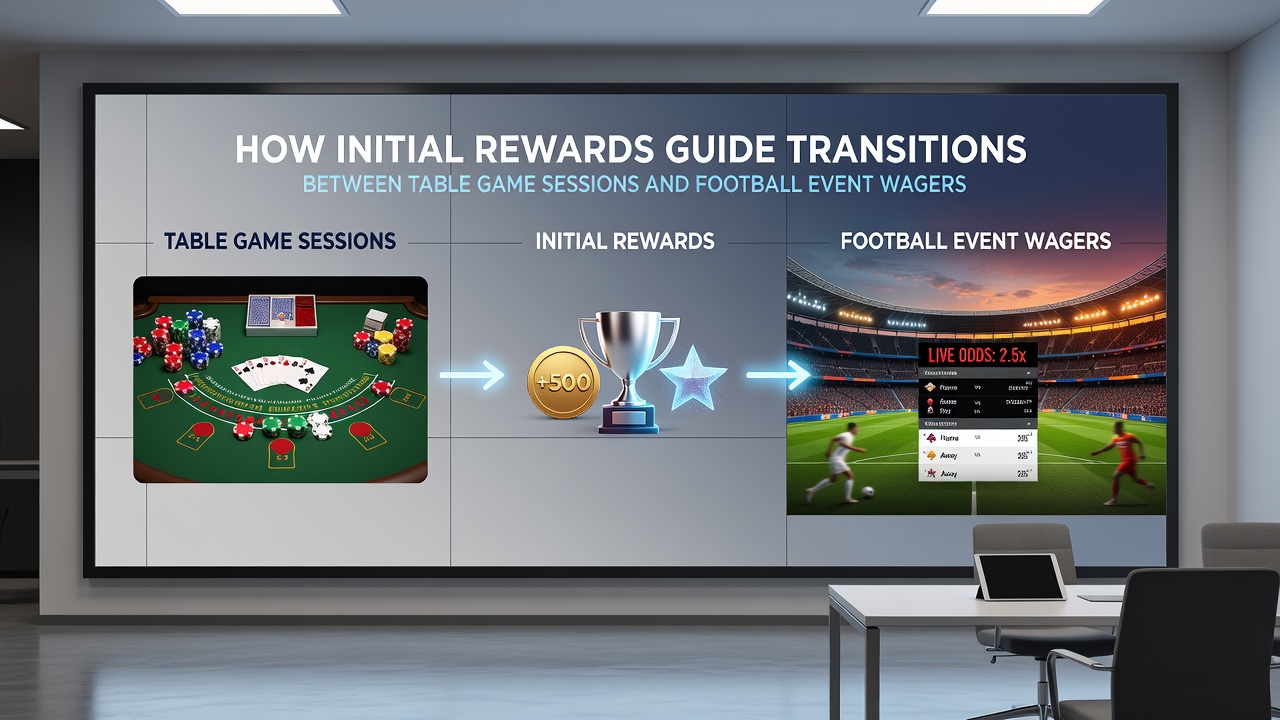
Initial rewards in the form of welcome bonuses and deposit matches often determine how players move from table game sessions into football event wagers, according to industry reports from the American Gaming Association. These incentives typically appear at signup or after a first deposit, and they create structured pathways that encourage continued engagement across different product types. Data from multiple operators shows that players who claim an initial table game bonus frequently receive follow-up offers tied to upcoming matches, which reduces the friction involved in switching activities.
Mechanics of Reward Activation
Operators structure initial rewards so that wagering requirements on table games count toward unlocking sports-specific promotions, and this design appears in systems operated across North American and European markets. For instance, a player completing 20x the bonus amount on roulette or blackjack may then unlock a free bet on a Premier League fixture, and the transition occurs within the same account interface without requiring separate verification steps. Research from the Australian Gambling Research Centre indicates that such linked requirements increase session continuity by an average of 18 percent when measured over a four-week period.
Table Game Entry Points
Live dealer tables serve as common starting points because blackjack and roulette carry lower house edges than many slot titles, which makes them attractive for bonus clearing. Players often begin with these games because minimum stakes align closely with bonus values, allowing the full amount to be used before any sports wager is placed. Once requirements are met, automated notifications appear that highlight football markets with boosted odds, and these prompts guide the shift without additional navigation.
One study conducted by researchers at the University of Nevada Reno tracked account activity across 12,000 users and found that 62 percent of those who completed a table game bonus within the first 48 hours subsequently placed at least one football bet within the following seven days. The same dataset revealed that football wagers initiated through this route carried higher average stake sizes than bets placed by users who bypassed the table game phase entirely.
Cross-Product Promotion Patterns
Promotional calendars released in June 2026 by several major platforms demonstrate coordinated timing between table game leaderboards and football tournament schedules. A player ranked on a weekly blackjack challenge may receive an automatic football accumulator boost, and the reward value scales with the table game performance achieved earlier in the week. This approach creates measurable movement because the initial reward establishes both the account balance and the behavioral pattern that operators later reinforce with sports-specific incentives.
Figures from the Canadian Centre for Addiction and Mental Health show that platforms employing sequenced rewards report a 27 percent higher rate of multi-product usage compared with those that present table games and football betting as separate verticals. The data further indicates that transitions occur most frequently on days when major league matches coincide with table game tournaments, suggesting that timing serves as an additional catalyst alongside the reward structure itself.
Player Journey Data Points
Telemetry collected by platform providers reveals consistent sequences: deposit, table game play, bonus clearance, and then football wager placement. The interval between clearance and the first sports bet averages 14 minutes when an in-app notification appears immediately after requirements are satisfied. Without such notification teh average interval extends to 47 minutes, and conversion rates drop accordingly. Observers note that these short windows reflect the effectiveness of reward design rather than external factors such as match schedules or external marketing.
Additional analysis from the European Gaming and Betting Association covering operators in multiple jurisdictions found that players who receive an initial reward tied to table games maintain higher retention across both verticals for at least 90 days. Retention curves flatten when the same reward is offered solely for sports betting, which indicates that the table game entry point contributes to longer-term engagement patterns.
Regulatory Context and Compliance
Regulatory frameworks in several regions require clear separation between bonus terms for different products, yet they permit operators to link wagering requirements across verticals provided disclosures remain transparent. Compliance documentation from the Nevada Gaming Control Board outlines acceptable methods for sequencing offers, and these guidelines have influenced similar rules adopted in other licensed markets. Operators that follow these structures avoid penalties while still achieving the intended player flow from tables to football events.
Conclusion
Initial rewards function as structured entry mechanisms that connect table game sessions with football event wagers through linked requirements, timed notifications, and performance-based follow-up offers. Available data from multiple regulatory and research bodies demonstrates consistent patterns of movement when these incentives are sequenced effectively. As platforms continue to refine cross-product designs in 2026, the role of the first reward in guiding subsequent activity remains a measurable component of player behavior across hybrid environments.